




| SNo. | Scientific Name | Locality | Habitat | Basis of Record | Description | Recorded By | Record Number | Island | Source | Date |
|---|---|---|---|---|---|---|---|---|---|---|
| 1 | Ocimum basilicum | Honolulu, Kewalo St. N. of Wilder Ave | Crack between road and curb. Moist area, mostly shaded from parked cars | Preserved_Specimen | One individual present | Faccenda, K. | 1970 | Oahu | BISH | 2021-06-12 |
| 2 | Ocimum basilicum | Maui | Preserved_Specimen | Subshrub, about 18 tall. Growing in sandy soil with Proopis, sida, and Cucumis near ocean. Paeahu. Flowers white; flower stalk purple; entire plant aromatic. | Herbst, D.R. | 856 | Maui | BISH | 1968-01-05 | |
| 3 | Ocimum basilicum | Diamond Head Community Garden, Honolulu, base of Diamond Head | Preserved_Specimen | ~2.5' high x 2' wide | Mayeda, C.S. | 10 | Oahu | BISH | 1990-12-07 | |
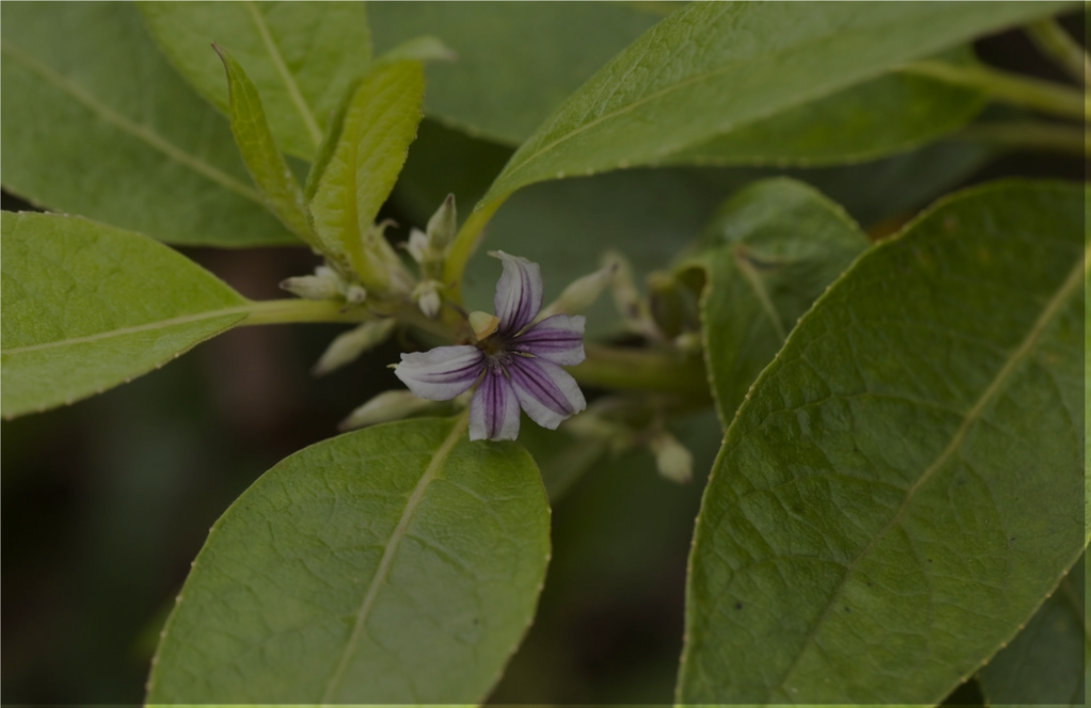
| 4 | Ocimum basilicum | M.Emrick, Honua Farm, Kikala Rd., Kalaheo | Preserved_Specimen | Stem pale whitish with strong purple overlay, glossy. Leaves: petiole pale purple, blade green varigated with purple, dull. Inflorescence: immature calyxes dark purple with hairs whitish; some calyxes nearly green; flowers 14 x 7 mm, mottled white and purple; stamens white, some with purple filaments; pistil purplish. Strong odor | Hume, L. | 391 | Kauai | BISH | 1989-08-27 | |
| 5 | Ocimum basilicum | Kilauea Volcano. N. rim of Caldera. Planted in garden; in woods around houses | Preserved_Specimen | Fosberg, F.R. | 60560 | Hawaii | BISH | 1980-09-07 | ||
| 6 | Ocimum basilicum | East end of Molokai, mi 19; open valley floor. Residence of Mr. & Mrs. George Peabody | Preserved_Specimen | Shrub 3' tall; lvs dark green, aromatic, shiny; flws white; seeds dark brown & numerous. Plant reseeding readily. | Evans, M. | 24 | Molokai | BISH | 1990-06-30 | |
| 7 | Ocimum basilicum | Diamond Head Community Garden, Honolulu, base of Diamond Head | Preserved_Specimen | ~2.5' high x 2' wide | Mayeda, C.S. | 9 | Oahu | BISH | 1990-12-07 | |
| 8 | Ocimum basilicum | Along road 1/2 mile S of Pohue bay | Preserved_Specimen | Scattered shrubs, grasses and herbs. | Higashino, P.K. | 10211 | Hawaii | BISH | 1984-03-26 | |
| 9 | Ocimum basilicum | Makiki Community Garden, C-4 | Preserved_Specimen | large, smooth crinkly leaves | Anderson, K. | 3 | Oahu | BISH | 1992-11-11 | |
| 10 | Ocimum basilicum | Cultivated plants grown in the garden at 3115 Kaloaluiki Place, Manoa Valley, Honolulu | Preserved_Specimen | Mexican basil an aromatic herb with lvs mint-flavored, though they have no mnt odor. Herb to 3 ft. tall, stems becoming woody with age; flws white. | Kadowaki, A. | 598 | Oahu | BISH | 1990-05-05 | |
| 11 | Ocimum basilicum | M.Emrick, Honua Farm, Kikala Rd., Kalaheo | Preserved_Specimen | Shrubby, 60 cm., with strong licorice odor. Young stems pale green to nearly white, glossy, with dark purple exposed side; stem maturing to pale green marbled pale purplish-brown. Leaves: succulent, above medium green, somewhat glossy, below paler, somewhat glossy. Inflorescense: largely purple; rachis pale green washed purple, oldest calyxes pure bright green, in flower upper calyxes dark purple, lower pale green washed purple; flowers large, showy. | Hume, L. | 396 | Kauai | BISH | 1989-08-27 | |
| 12 | Ocimum basilicum | Foster Community Garden, Honolulu | Preserved_Specimen | 3' high x 2' wide | Mayeda, C.S. | 3 | Oahu | BISH | 1990-12-04 | |
| 13 | Ocimum basilicum | Foster Botanic Garden | Preserved_Specimen | A shrub 1.2 m tall grown in partial shade. The crushed plant has a strong odor. Flowers white. | Lau, J. | 1702 | Oahu | BISH | 1985-12-02 | |
| 14 | Ocimum basilicum | Kohala, Puu Hue Ranch | dry pasture | Preserved_Specimen | Ewart III, G.R. | 188 | Hawaii | BISH | 1932-03-15 | |
| 15 | Ocimum basilicum | Backyard at 865 Wnaao Rd., Kailua, 96734 | Preserved_Specimen | Plant cultivated from material bought at Asian food store as Thai basil. | Wagner, W.L. | 5645 | Oahu | BISH | 1985-12-28 | |
| 16 | Ocimum basilicum | Oahu | Preserved_Specimen | Subshrub, about 18 tall. Growing in sandy soil with Prospopis, Sida, and Cucumis near ocean. El. about 50 ft. Paeahu. flowers white;' flower stalk purple; entire plant aromatic. | Herbst, D.R. | 856 | Oahu | BISH | 1968-01-05 | |
| 17 | Ocimum basilicum | Makawao, Makena, near sea | Local patches. Occasional in dry place. | Preserved_Specimen | Hosaka, E.Y. | 1792 | Maui | BISH | 1937-04-08 | |
| 18 | Ocimum basilicum | Manoa Community Gardens | Preserved_Specimen | Mayeda, C.S. | 5 | Oahu | BISH | 1990-12-06 | ||
| 19 | Ocimum basilicum | Foster Botanic Garden | Preserved_Specimen | A shrub 1.2 m tall grown in partial shade. The crushed plant has a strong odor. Flowers white. | Lau, J. | 1702 | Oahu | BISH | 1985-12-02 | |
| 20 | Ocimum basilicum | Ewa Beach. | Preserved_Specimen | Shitanishi, J. | Oahu | BISH | 2009-05-12 | |||
| 21 | Ocimum basilicum | Honolulu, 1930 Ualakaa Street | Preserved_Specimen | Wilder, G.P. | Oahu | BISH | 1930-11-02 | |||
| 22 | Ocimum basilicum | Foot of plateau | Preserved_Specimen | Stokes, J.F.G. | Niihau | BISH | 1912-01-01 | |||
| 23 | Ocimum basilicum | Foot of plateau | Preserved_Specimen | Stokes, J.F.G. | Niihau | BISH | 1912-01-01 | |||
| 24 | Ocimum basilicum | Molokai | Preserved_Specimen | Uehara, S. | Molokai | BISH | 1961-04-11 | |||
| 25 | Ocimum basilicum | Koloa, Kalaheo, 3581 Kaloke St | garden | Preserved_Specimen | 0.6 m; foliage light bright green; aromatic with licorice basil scent; corolla white | Lorence, D.H. | 6354 | Kauai | BISH | 1989-05-10 |
| 26 | Ocimum basilicum | In Hilo | Growing in a yard. | Preserved_Specimen | Shrub about 2' tall. | Kubo, R. | Hawaii | BISH | 1978-10-27 | |
| 27 | Ocimum basilicum | Mauka of Kapaa town on Hauiki Rd. | Lowland roasdside area. | Preserved_Specimen | Herb to 1 ft. tall. | OED | 2010033104 | Kauai | BISH | 2010-03-31 |
| 28 | Ocimum basilicum | UH campus, Sherman Laboratory | full sun | Preserved_Specimen | Upright subshrub, crushed leaves have a strong spicy odor. The stems and young leaves have a beet purple cast. The corolla is white with tinge of blush pink | Lau, J. | 1168 | Oahu | BISH | 1985-06-30 |
| 29 | Ocimum basilicum | W rim of Maunalei Gulch | Scattered on ridgetop in remnant shrubland. | Preserved_Specimen | Leaves aromatic. | Oppenheimer, H.L. | 50611 | Lanai | BISH | 2006-05-10 |
| 30 | Ocimum basilicum | past Hanauma Bay, road panks | shade; with Leucaena, Acacia; dry slope | Preserved_Specimen | to 5' shrub; fragrant odor | Anderson, D. | 0.42 | Oahu | BISH | 1972-01-25 |
| 31 | Ocimum basilicum | Kamalo | Cultivated | Preserved_Specimen | Fosberg, F.R. | 13544 | Oahu | BISH | 1937-01-12 | |
| 32 | Ocimum basilicum | UH campus, Sherman Laboratory | full sun | Preserved_Specimen | Upright subshrub, crushed leaves have a strong spicy odor. The stems and young leaves have a beet purple cast. The corolla is white with tinge of blush pink | Lau, J. | 1168 | Oahu | BISH | 1985-06-30 |
Lorem ipsum dolor sit amet, consectetur adipiscing elit, sed do eiusmod tempor incididunt ut labore et dolore magna aliqua. Ut enim ad minim veniam, quis nostrud exercitation ullamco laboris nisi ut aliquip ex ea commodo consequat. Duis aute irure dolor in reprehenderit in voluptate velit esse cillum dolore eu fugiat nulla pariatur. Excepteur sint occaecat cupidatat non proident, sunt in culpa qui officia deserunt mollit anim id est laborum.
Lorem ipsum dolor sit amet, consectetur adipiscing elit, sed do eiusmod tempor incididunt ut labore et dolore magna aliqua. Ut enim ad minim veniam, quis nostrud exercitation ullamco laboris nisi ut aliquip ex ea commodo consequat. Duis aute irure dolor in reprehenderit in voluptate velit esse cillum dolore eu fugiat nulla pariatur. Excepteur sint occaecat cupidatat non proident, sunt in culpa qui officia deserunt mollit anim id est laborum.
Lorem ipsum dolor sit amet, consectetur adipiscing elit, sed do eiusmod tempor incididunt ut labore et dolore magna aliqua. Ut enim ad minim veniam, quis nostrud exercitation ullamco laboris nisi ut aliquip ex ea commodo consequat. Duis aute irure dolor in reprehenderit in voluptate velit esse cillum dolore eu fugiat nulla pariatur. Excepteur sint occaecat cupidatat non proident, sunt in culpa qui officia deserunt mollit anim id est laborum.
Lorem ipsum dolor sit amet, consectetur adipiscing elit, sed do eiusmod tempor incididunt ut labore et dolore magna aliqua. Ut enim ad minim veniam, quis nostrud exercitation ullamco laboris nisi ut aliquip ex ea commodo consequat. Duis aute irure dolor in reprehenderit in voluptate velit esse cillum dolore eu fugiat nulla pariatur. Excepteur sint occaecat cupidatat non proident, sunt in culpa qui officia deserunt mollit anim id est laborum.
Lorem ipsum dolor sit amet, consectetur adipiscing elit, sed do eiusmod tempor incididunt ut labore et dolore magna aliqua. Ut enim ad minim veniam, quis nostrud exercitation ullamco laboris nisi ut aliquip ex ea commodo consequat. Duis aute irure dolor in reprehenderit in voluptate velit esse cillum dolore eu fugiat nulla pariatur. Excepteur sint occaecat cupidatat non proident, sunt in culpa qui officia deserunt mollit anim id est laborum.
Lorem ipsum dolor sit amet, consectetur adipiscing elit, sed do eiusmod tempor incididunt ut labore et dolore magna aliqua. Ut enim ad minim veniam, quis nostrud exercitation ullamco laboris nisi ut aliquip ex ea commodo consequat. Duis aute irure dolor in reprehenderit in voluptate velit esse cillum dolore eu fugiat nulla pariatur. Excepteur sint occaecat cupidatat non proident, sunt in culpa qui officia deserunt mollit anim id est laborum.
Thank you for your interest in submitting an image of
Select your image and leave a brief description of your photo below.